This is a collection of Drama Activities provided to me by our wonderful drama professor, Phil. Throughout Drama 305, I’ve learned that Drama-based activities can be a powerful addition to the classroom, helping students build communication skills, creativity, and self-confidence. When students take part in role-play or performance, they learn how to express their ideas more effectively, collaborate with peers, and consider viewpoints beyond their own. This encourages empathy and emotional growth. Drama also brings academic content to life, making subjects like literacy and history more engaging and easier to remember. It promotes critical thinking and problem-solving, while creating a supportive space where students feel comfortable exploring different ideas and emotions. Altogether, drama contributes to a richer learning experience and supports students’ overall development. The following are some simple activities appropriate in moderation for grades K-12.
Name Games/Get to Know You Games
- Step up to the line
- Create a line on the floor with tape
- Have students line up on either side of line (in two lines)
- Create questions “step up to the line if…”
- Students will step up to the line if the question or statement applies to them
- Name Circle
- Have students form a circle
- Students will say their name and the whole class repeats it
- Move around the circle following this process until all students have called their name
- Name Circle: with Sounds and Gestures
- Students stand in a circle with the teacher. The teacher starts the game by stating their name in a funny way. Students will repeat names back in the same funny way. The next student will say their name and students and teacher will repeat. Repeat around the entire circle. On the teachers next turn, they will say their name again in a funny way and will add a gesture (i.e. Riding a motorcycle), students will repeat names in a funny way and add the gesture. Play will continue around the circle with each student repeating their name and gesture. In the third round the teacher will start by only doing their gesture, the students will mimic the gesture. The next student will do their gesture and the teacher and students will repeat. Continue around the circle until all students have completed just their gesture.
- 1st round – name voiced in a funny way
- 2nd round – name voiced in a funny way with a gesture
- 3rd round – no sound only their gesture
- Paparazzi
- Students find a partner (groups of two) – introduce themselves to partner
- Teacher yells action and students promptly take a picture with imaginary camera of their partner while saying their name
- Extension: Teacher may yell spin once/ spin twice or add something that students have to do before taking imaginary picture
- Come sit next me
- Students all sit in a big circle
- One student starts by saying “I want ___ to come sit next to me”,
- The person that got picked, moves spots and goes and sits next to the person that just called their name
- The person on the right of the person that left goes next and says, “I want ___ to come sit next to me” and so on)
- Orbit
- Students in a circle.
- Hold an imaginary ball in your hand and throw it to another person, saying their name as you “throw” them the “ball”. They “catch” it and continue the game until everyone has “touched” the “ball”.
- To make it trickier, have multiple balls in play.
- Variation: use real objects like a soft ball or stuffed animals – having something to actually visualize makes this game easier, especially with younger students
Brain Breaks/Warm Ups
- Take a Walk in the Rain
- Students seated in a circle; they will create a soundscape (we will use an example of a Brazilian Rainforest). The teacher walks around the circle while doing different actions, as they pass each student, they are instructed to copy the action that the teacher is doing and continue doing that until the teacher passes them again. Rubbing hands together, snapping, clicking with mouth, etc. Start silent, sound crescendos, then return to silence.
- You need a calmer group to do this with; they need to be able to sit silently for multiple minutes and clearly follow instructions without any side comments.
- Add, Subtract, Multiply
- Students find a partner (groups of two) – introduce themselves to partner
- Students hold fingers behind back and face each other
- Start with Addition – only using one hand, students must hold up a number of fingers (1-5) on the count of 3
- Repeat the game in Addition mode for some time. Move onto subtraction (subtract smaller number held up from the largest number held up) and then multiplication (Know up to 5 times tables
- Alphabet Sounds (Partner Game)
- Example led by teacher while students respond.
- Go through the alphabet, saying a letter, then saying a sound starting with that letter. (For example, “A, argh!! B, bleh.” Continue A-Z.)
- This is a super silly and creative brain break that can be done in any space and with the whole class or in partners.
- Imaginary Ball
- Students stand in large circle
- Teacher starts by holding imaginary ball in cupped hands
- Teacher choose someone else in the circle; calls out their name and blows the ball to them
- The person who catches the ball it is now their turn to choose someone else and blow the ball to them while calling their name
- Extension: Teacher adds additional balls to the mix, having several imaginary balls and names being called at the same time
- Paper Plate Orchestra
- Equipment: 2 Paper plates for each student as well as you the teacher
- Standing in a semicircle, have students face each other with their 2 paper plates. The teacher will be the conductor. Students repeat actions of the conductor (teacher) as they make actions with their paper plates. Up and down motion, double time, scratchy noises, funny shapes and positions. The conductor then plays a piece of music (Instrumental), and the students mimic the conductor’s moves and actions with the paper plates.
- Gifts from the Sky
- Students mill around the room and “catch” something from the sky. They catch it, examine it, use it and it aside, wipe their hands clean (finished) and get ready to catch their next object from the sky. Good use of imaginary skills. i.e. pretend to catch a baseball, examine it, use it, play with it etc. throw it away, wipe hands clean, get ready for the next imaginary item.
- Blanket Transformation
- Give students a blanket. Create a few examples of how you can transform the blanket into an item or create. You are able to use your body to bring the item to life. Ex. an old lady’s cloak. Allow students to use imagination and create their own item.
- Heads or Tails
- Materials: Coin
- Flip coin, students indicate which side they think it will land on by pointing either at their head or their butt. If you are correct, you stay standing, if you are incorrect, you sit down. The last person standing wins a prize. Make sure the last two people choose different actions. Keep track of who wins so that everyone gets a chance to win a prize over the duration of the class.
- Hand Squeezing
- Students stand in a circle and hold hands. Starting with the teacher, squeeze the hand of the person beside you and they squeeze the hand of the person beside them, continuing around the entire circle until it gets back to the person that started.
- Freeze Like…
- Students mill around the room. The teacher calls out, “freeze like [teacher or students name]” and strikes a pose. All students freeze, imitating the pose. The teacher chooses a new person who will strike the next pose, and everyone resumes milling.
- Can be repeated as many times as you like. Let the chosen poser choose the next one each time.
- Transformation
- Pass an object around for students to transform into another object using few words and mostly actions. A scarf could be a large weight, a baby, a hot dog, a football etc.
- If you can hear my voice….
- The teacher makes a motion with their hands or arms and says “if you can hear me, do this”. Students will stop what they are doing and will mimic the teachers’ actions.
- Kung Fu Punctuation
- A Fun twist on learning and remembering punctuation.
- Period = punch (“ha”)
- Comma = twist of hand (“shi”).
- Question mark = slicing hand (“shi, shi, shi”)
- Exclamation mark = (“shiiiiha!”)
- Speech marks = one foot up, both hand in air (“ayeeee”)
- Apostrophe = one hand wagging no (“blblblb”)
- Capital Letters = Hands on head
- Write sentences on the board and help students to do the actions as you read them aloud. To practice further, students can write their own sentences individually or in groups, and then do the actions aloud.
- For some friendly competition, you can also do a punctuation battle: two fighters and one referee. The referee (teacher) chooses three punctuation marks and fighters race to complete them fastest.
Story Games
- Brainstorm
- Equipment: Large sheets of paper and sharpie
- The teacher labels each sheet of paper with a subject such as knights or werewolves and asks the students what they know about these subjects prior to reading a story book. Easily adapted to various subjects and topics. Include time and setting if the book is from a different time period. (Completed before a story drama – Story book analysis)
- Tableaus
- Divide students in small groups 4-8 students. Students in groups create scenes with their bodies and facial expressions. Teachers should remind students that they should all be at different levels and planes when posing. Students have about 10-15 minutes to plan/practice and then they will present to the class. Other students in the class will discuss what they have seen and what story the students are trying to show. Works great with story books for a story drama.
- Frozen Tableaus
- A silent frozen picture that captures a moment in time. Done with students in groups of 4-6, they will need to create a tableau and then hold it for 5-10 seconds while the rest of the class guess what they are portraying.
- Give the class a prompt and each group can take 3-5 minutes to practice/direct their tableau before showing it to the class.
- Once students are comfortable with the concept, groups can sit in a large circle around the room. The teacher goes over to a group,whispers a prompt (ex: runway fashion show, aquarium etc.) and the group must immediately construct the tableau in the centre of the room while other students guess what they are acting out.
- Important things to note: you can be an inanimate object, it should be clear what is happening, your tableau should have variation in height, tension is important.
- Find Your Herd
- Assign every student an animal (chicken, pig, cat, dog, sheep etc.).
- With their eyes closed, students must find their animal group based only off of the sounds they are making.
- Working Tableaux
- Divide students in small groups 4-8 students. The teacher walks around and tells groups a scene or topic (Such as baseball game, rock band, classroom, at the zoo) each group would have a different topic. Students in the groups create frozen scenes with their bodies and facial expressions. Teachers should remind students that they should all be at different levels and planes when posing. Students have about 10-15 minutes to plan/practice and then they will present to the class when instructed to by the teacher. Other students in the class will discuss what they have seen and what story the students are trying to show.
- Conscience Alley
- Equipment: Tape and storybook
- Tape a line down on the floor. Have students stand on either side of the line and share their thoughts from the perspective of a character in a book as one student who is in the role of a character from a story walk down the line.
- Writing in Role
- Use a story or movie scene where two characters are experiencing a conflict, scenario, or situation. Ask students to create a solution, alternative ending, or possible outcome. Have students move to a comfortable space to work. Provide materials such as pencil/pen and paper (clipboards or hardcover books can be helpful). Give students a clear prompt related to the scenario. Instruct students to complete the task based on the prompt.
- Students in Role
- A great activity for practicing and improve skills. While reading a story, pause and allow students to step into the role of the characters and act out what they think will happen next. (Students can do this in small groups, pairs or individually)
- Stage Whisper
- Have students pair up and push against each other’s hands while “stage whispering” a song or statement. For example: Happy Birthday song, Oh Canada, or a Christmas song.
- Whoosh! Theatre
- Students stand in a circle while the teacher reads out a script or story. Students are able to voluntarily pop into the circle to fill the role of one of the characters in the story being read. Once the scene is over, the teacher and the students say “woosh!” and the scene dissolves.
- Guided Imagery
- Ask students to find a comfortable place in the room (they can lay down, sit up, lean up against a wall etc.)
- Now paint the picture for them. Read your story and be as descriptive as possible. Allow students to relax in the moment
- Ask questions like “what do you see, smell, hear?” ext.
- Story Drama
Design a drama lesson centered around a story or book. As you read the text with students, pause at key moments to carry out activities that help them engage with the characters and the narrative. These exercises should encourage students to explore different perspectives and deepen their overall understanding of the story, while also connecting back to the main question or theme of the lesson. Some examples of activities you could use are:
- Tableauxs
- Step up to the line
- Conscience Alley
- Students in Role
- And many more….
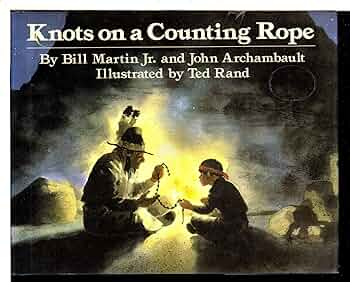
My Example Story Drama: Knots on a Counting Rope
_Story Drama – Lindsay, Makayla, EllaDownload
Other
- Milling Around
- Students walk around the room or space in any direction. When instructed to by the teacher students will “change direction”. The teacher will repeat “change direction” several times before stating “form a circle”. Students will come together and form a circle as fast as they can as the teachers count down “3, 2, 1”.
- Milling: Copy the Leader
- Students will walk around the room or space. It will be decided by the teacher who will be the one who will make the first statue. As the Students walk around, they will wait for the student to make their statue. When the named student makes their pose, the other students must stop milling and make the same pose. That student can then pick the next student to make a pose. Repeat a couple of rounds.
- Milling: Paced
- Students form a circle. The teacher counts off A, B, C around the circle to divide students into 3 groups. Group A will mill fast, Group B will mill at normal speed, and group C will mill in slow motion. The teacher asks students to mill at their designated speed and they will say “A’s are now normal, B’s are slow motion, C’s are fast” students will begin to mill at their new speed. The teacher will ask students to switch again. Play continues until the teacher says stop.
- Puppets
- Puppets and hand puppets are powerful tools for encouraging imagination, storytelling, and self-expression in elementary drama. By using puppets, students can explore characters, emotions, and situations in a safe and playful way.
- Puppets allow children to “step into” a role without feeling self-conscious, making it easier for shy students to participate. Hand puppets are especially effective for quick improvisation, voice work, and dialogue practice, as students can easily animate them using simple movements.
- Use puppets to model storytelling, introduce new scenarios, or guide group activities, while students can use them to create their own scenes, practice cooperation, and develop communication skills.
- Great for using drama in cross curricular ways. (Math, Science, ELA)
Finger Puppet Warm-up ideas:
- Hand shake out, Palms up and down, Finger ripples, Fist and hand stretches, Do the worm, Thumb wars, Chewing gum
- Miming
- Miming is a great drama activity to share with students. Students use only their bodies, facial expressions, and gestures to communicate ideas and tell a story-without speaking.
- Mimining helps develop focus, creativity, and physical awareness, as students learn to show emotions, actions, and objects through movement alone.
- Miming encourages students to think carefully about how to make their actions clear to an audience, building confidence and expressive skills.
- Use miming for warm-ups, storytelling exercises, or games, while students can create short silent scenes to practice imagination, observation, and nonverbal communication.
- Improve
- Students can improve by creating engaging characters and script all while developing their voice, movement, expression. Improve encourages students in becoming more confident, and making clearer, more engaging choices in a performance.
- Example: A student performs a short scene using a simple prompt and makes things up on the spot. This practice helps students build confidence, expand their thinking, and create more engaging and believable performances.
- Isolation
- Practice moving different parts of your body independently, as this is essential for creating precise and expressive movements that help convey a story. Focus on isolating areas such as the head, arms, legs, trunk, or the entire body.
- Elevator Pitch
- Materials: markers, pencils and poster board or paper of some kind.
- Great activity for with in a Story Drama
- Read a story and have the students design something on poster board or paper or white boards that relates to the content.
- After about 15 minutes you can have each group present their “elevator pitch” to the rest of the class. (ex. Design a pair of shoes for the book “Those Shoes”)
Sorry, but comments are not enabled on this site.